
Latest
Twisted Leading Edge – Hydrodynamic optimisation for Becker rudders
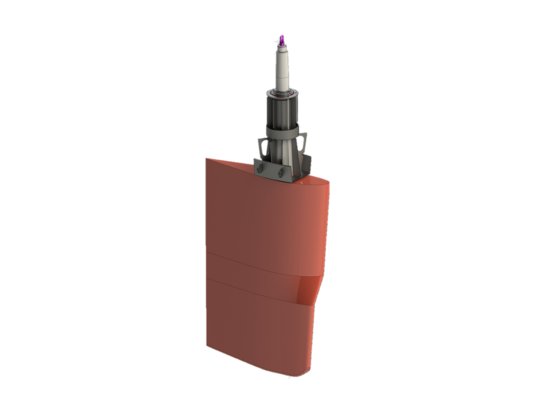
Twisted Leading Edge is a hydrodynamic design concept developed by Becker Marine Systems in which the leading edge of the rudder is twisted to adapt to the rotating propeller wake. This solution has been used successfully on ships worldwide for more than two decades and is designed to create a more even pressure distribution across the rudder surface. The result is reduced cavitation, lower drag, and improved hydrodynamic efficiency.
On a conventional rudder, the leading edge is straight even though the water flow behind the propeller rotates. The asymmetric propeller flow can therefore create localized low-pressure areas that increase the risk of cavitation, vibrations, and erosion damage. With Twisted Leading Edge, the rudder’s leading edge is instead gradually twisted along the height of the rudder blade to better follow the natural movement of the propeller flow. This results in a more even load distribution across the propeller surface and a more efficient inflow to the propeller. The optimized pressure distribution also reduces the propeller’s hydrodynamic drag, which improves propulsion efficiency and contributes to lower energy losses. The improved flow has several positive effects. The risk of cavitation is reduced, which minimizes noise, vibrations, and erosion damage to the rudder blade, while also allowing the rudder to operate at higher rudder angles before cavitation occurs. This is particularly valuable on vessels with high operating speeds or high propeller loads where both maneuverability and energy efficiency are priorities.
When is the Twisted Leading Edge appropriate?
The Twisted Leading Edge is particularly suitable for ships where low fuel consumption, limited cavitation, and high hydrodynamic efficiency are key design objectives. The solution is often used on container ships, Ro-Ro ships, car carriers, passenger ships, and other vessels with high operating speeds or high propeller loads. The Twisted Leading Edge is also frequently combined with a rudder bulb, where the two solutions work together to optimize water flow around the propeller and rudder. Together, they contribute to higher hydrodynamic efficiency and improved propulsion economy.
Advantages of Twisted Leading Edge
- Adapts the rudder’s leading edge to the rotational movement of the propeller flow.
- Provides a more even pressure distribution across the rudder blade.
- Reduces the risk of cavitation, vibrations, and erosion damage.
- Reduces the rudder’s hydrodynamic drag.
- Improves the rudder’s hydrodynamic efficiency.
- Allows for larger rudder angles before cavitation occurs.
- Can be combined with a rudder bulb for further optimization of the water flow behind the propeller.