
Latest
King Support - Optimized Bearing Solution for Large Becker Rudders
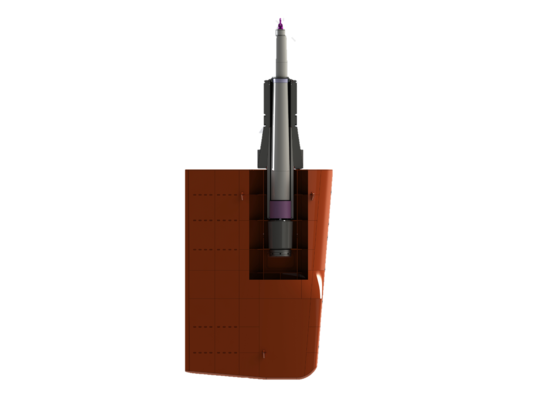
As the rudder surface area increases, significantly greater demands are placed on the rudder stock, bearings, and the surrounding ship structure. At the same time, the goal is to achieve as streamlined a rudder profile as possible to reduce hydrodynamic drag and improve the ship’s energy efficiency. These design goals often conflict with one another. King Support is a design alternative from Becker Marine Systems that solves this by moving the rudder’s main bearing further down the rudder blade, closer to the rudder’s center of force. The result is more efficient load distribution, lower bending moments, and a design that can be made both lighter and stiffer.
King Support is primarily used on larger Becker rudders where high rudder forces must be combined with low energy consumption, high operational reliability, and a long service life.
How does King Support work?
On a conventional rudder, a large portion of the hydrodynamic loads is absorbed high up in the structure, which means that the rudder stock, bearings, and rudder trunk are subjected to significant bending moments. With King Support, the main bearing is moved further down the rudder so that the bearing support is closer to the rudder’s center of force. The shorter lever arm between the point of application of the force and the bearing reduces the load on the entire rudder system while also providing a stiffer structure.
The improved load distribution makes it possible to optimize the rudder’s design without compromising strength. Larger rudder surfaces can be used while the rudder profile can be made slimmer, which contributes to lower hydrodynamic drag and improved hydrodynamic efficiency.
When is King Support appropriate?
King Support is particularly suitable for vessels with large, heavily loaded rudders where high demands are placed on both maneuverability and structural strength. The solution is often used on:
- Container ships
- Tankers
- Ro-Ro and RoPax vessels
- Passenger ships
- Offshore vessels
- Tugs
- Other vessels with large rudders and high rudder forces
King Support is often used in conjunction with Becker’s larger flap rudders and Schilling rudders, where high rudder forces place significant demands on both the rudder design and the surrounding ship structure.
Advantages of King Support
- Moves the main bearing closer to the rudder’s center of force.
- Reduces bending moments in the rudder stock, bearings, and rudder trunk.
- Provides greater structural stiffness.
- Enables larger and more hydrodynamically efficient rudders.
- Reduces the load on bearings and seals.
- Contributes to lower maintenance requirements and a longer service life.
- Improves conditions for low energy consumption and high operational reliability.