
There's room here in the left column for custom content.
Becker Intelligent Monitoring System (BIMS)
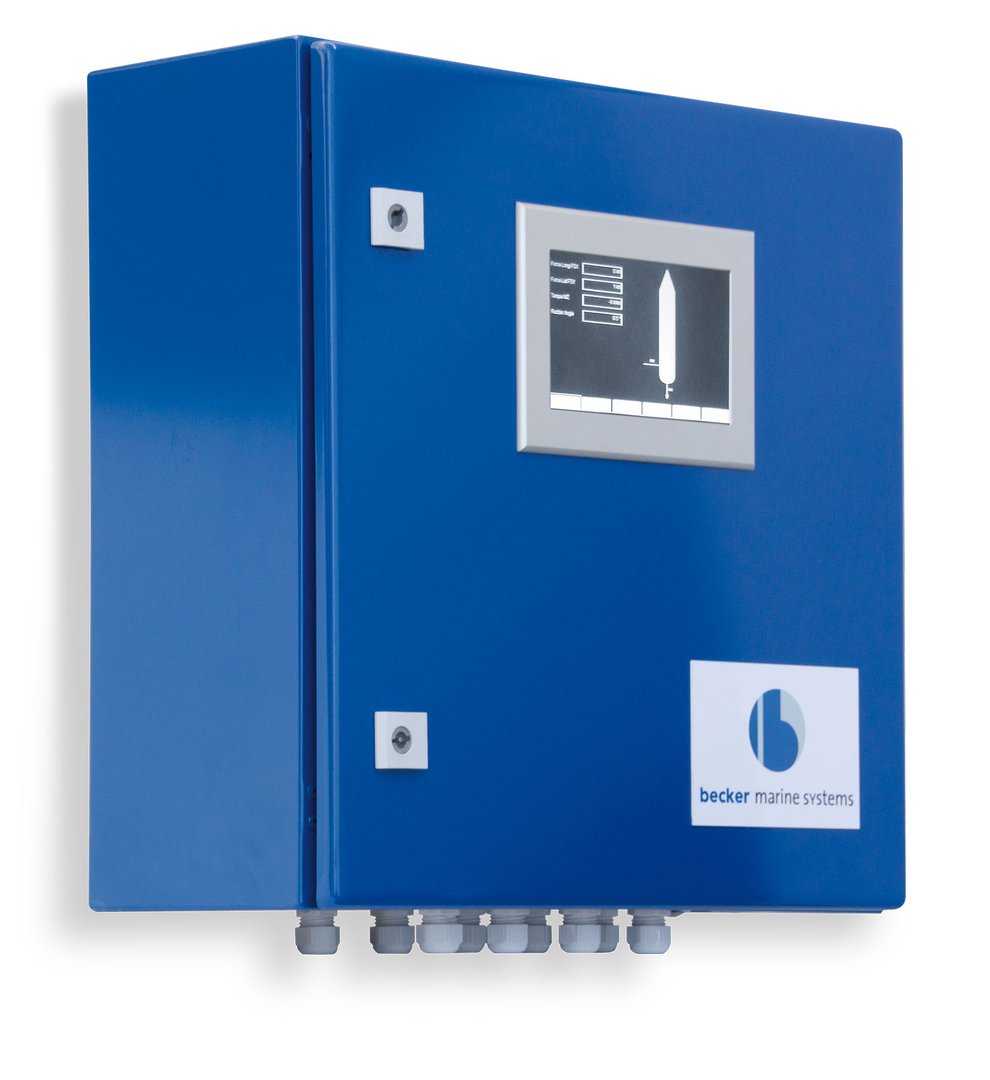
The Becker Intelligent Monitoring System (BIMS) is an advanced monitoring system that measures the hydrodynamic forces acting on the rudder in real time. Unlike conventional steering systems, which only detect the rudder angle, BIMS provides continuous information on the actual lift, drag, and torque generated by the rudder under current operating conditions. This information is used to improve maneuverability, reduce energy consumption, and enhance safety during both normal operation and advanced maneuvers. The system is based on sensors integrated into the rudder stock that continuously measure bending and torsional forces. The collected data is processed in a control unit and can be displayed on the bridge while simultaneously being transmitted to the ship’s autopilot, dynamic positioning (DP) system, or other navigation and monitoring systems via standardized interfaces.
How does BIMS work?
When a vessel maneuvers, the hydrodynamic forces acting on the rudder change continuously depending on speed, propeller load, rudder angle, and water flow. Traditional steering systems are based primarily on the rudder’s position, whereas BIMS calculates the actual rudder force in real time. This allows the system to identify when the rudder is operating optimally, when lift begins to decrease, or when the rudder is approaching stall—that is, when the water flow detaches from the rudder profile and steering effectiveness rapidly deteriorates. The crew thus has a significantly better basis for decision-making during demanding maneuvers, while the autopilot can steer with fewer and more efficient rudder movements.
Improved maneuvering and lower energy consumption
Since BIMS continuously measures the rudder’s actual workload, the steering system can utilize the rudder more efficiently.
This means, among other things:
- fewer unnecessary control surface movements
- improved course-keeping under autopilot
- more efficient dynamic positioning (DP)
- reduced hydrodynamic drag
- lower fuel consumption
- reduced emissions
- less wear on the steering gear and rudder system
The system also provides a graphical display of rudder forces on the bridge, making it easier for the crew to optimize maneuvering under varying operating conditions.
When is the Becker Intelligent Monitoring System (BIMS) a good fit?
BIMS is particularly well-suited for vessels where high maneuverability, energy efficiency, and operational reliability are priorities.
The system is suitable for, among other things:
- offshore vessels with dynamic positioning (DP)
- tugs
- container ships
- tankers
- passenger ships
- RoRo and RoPax ships
- other vessels with high demands for precise maneuvering and optimized energy consumption
BIMS can be installed both on newbuilds and as a retrofit on existing vessels and integrated with the vessels’ existing navigation and automation systems.
Benefits of the Becker Intelligent Monitoring System
- Measures the rudder’s actual hydrodynamic forces in real time.
- Displays lift, drag, and torque during operation.
- Identifies when the rudder is approaching stall.
- Improves the performance of the autopilot and DP system.
- Fewer rudder movements result in lower fuel consumption and reduced emissions.
- Reduces wear on the steering gear and rudder system.
- Integrates with existing navigation and monitoring systems.